The government’s Solar on Schools programme has put solar for schools firmly on the agenda for boards across the country. It is a welcome signal. But it also funds a limited number of schools, and the more interesting question for most boards is the one it raises rather than answers: if solar makes sense for a few hundred schools, does it make sense for ours, and what does doing it well actually look like?
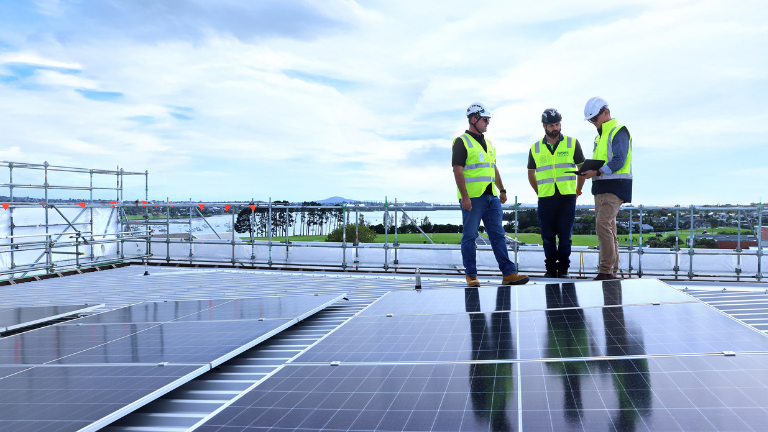
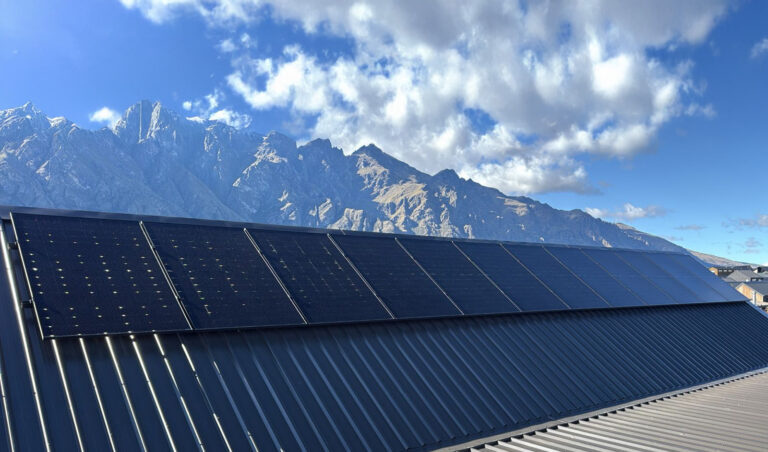
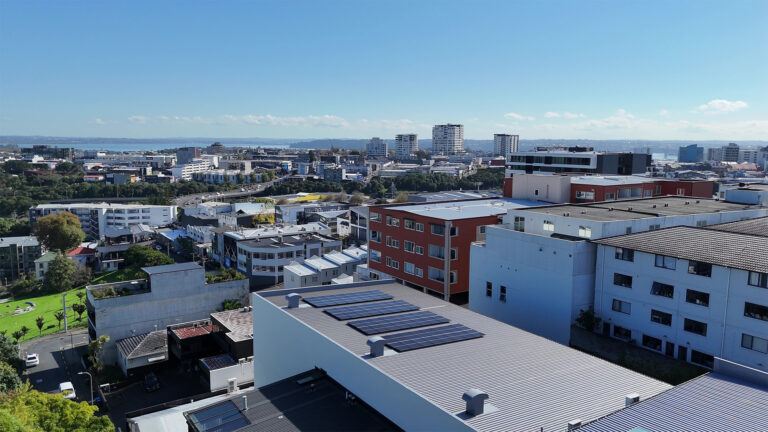
Saint Kentigern College in Pakuranga offers a useful answer. As an independent school, it was never going to be part of the government rollout, so it weighed up the decision on its own merits and chose to invest. The result is a 162.4kW system across six roof surfaces that covers 25% of the campus’s energy use
The financial case stands on its own
Set the environmental story aside for a moment, because the numbers are what most boards need first. At Saint Kentigern, the system pays for itself in under four years against a 25-year asset life. That is the part that tends to surprise people who last looked at solar some years ago, when paybacks were far longer.
| “It was a no brainer. The proposal spoke very loudly about what it could do for us. It was about when we would start, not if.” Director of the Saint Kentigern Foundation |
For a board, the logic is a familiar one. A school’s energy bill is an operating cost that only rises. Solar converts part of that recurring cost into a fixed, owned asset, and the money saved goes back into the school rather than to the energy retailer. As Future Energy’s Heath Coleman puts it, it lets a school put funding into things that deliver better value than an energy bill. At Saint Kentigern those savings start in the first year and climb as power prices rise.
Disruption is not the barrier people expect
A common worry is what an installation does to a working campus. At Saint Kentigern the answer was very little. The work was staged around a live construction site under a shared safety in design approach, and the school barely noticed it happening.
| “We didn’t even know it was happening.” Director of the Saint Kentigern Foundation |
Where solar for schools becomes more than a power bill
This is the part that matters most, and the part a board can lead on. A solar system on a school is visible, measurable, and real, which makes it a teaching tool as much as an energy asset. Students can see generation on a live dashboard, understand how a building uses energy, and follow the pathway into the trades and technology behind it. Future Energy already participates in a Gateway programme with One Tree Hill College, giving students hands-on experience of the industry, and Saint Kentigern’s new system opens the same kind of opportunity to build sustainability into learning rather than leaving it as a poster on a wall.
That reflects how Future Energy sees its own role. The company is not just a solar business; it exists to help transform the energy system and accelerate the move to renewable energy, and the education side is central to that. We explore this further in our piece on solar as a classroom. The system on the roof is the start of the conversation, not the end of it.
For schools the programme will not reach
With up to 500 schools funded out of roughly 2,500, most will not be selected, and private schools are not covered at all. The encouraging news is that the case does not depend on a grant. The same commercial solar economics that made sense for Saint Kentigern make sense for any school with a sizeable power bill and a suitable roof, and a system can often be cash flow positive even when funded because the savings outweigh the financing costs.
Frequently asked questions
How much can a school save with solar?
It depends on the system’s size and the school’s power bill, but the savings can be substantial. Saint Kentigern College is making meaningful savings from its first year, and those savings grow as power prices rise.
What is the payback period for solar on a school?
At current pricing, a well-designed system can pay for itself in about 4 years, given a 25-year asset life. Saint Kentigern’s payback is under four years, after which the energy is effectively free for the remaining two decades.
Does solar still make sense if our school is not in the government programme?
Yes. The financial case does not rely on a grant. The economics that worked for Saint Kentigern, an independent school that funded its own system, apply to any school with a sizeable power bill and a suitable roof.
If your board is asking the question, the worked example is there to learn from. You can read the full Saint Kentigern case study, including the system design and the full financials, or talk to our commercial team about what the numbers look like for your school. Call 0800 338 363 or book a free consultation.