

Google Reviews
4.8 Rating
on Google
Generating your own electricity at home is now the cheapest way to power a New Zealand home. With grid power prices climbing year on year, investing in solar panels NZ wide means lower bills today and protection from rising costs for decades to come. Our expert team will assess your home, design the right system, and handle every step from installation to grid activation.
Solar
Delivered
5 Star
Reviews
Regions
Nationwide


Your home runs harder than ever. Solar keeps up – and keeps costs down.
Grab a 10 panel + inverter bundle from just $8,999, with 50 months interest free or a clean energy loan.
Power your family’s life today, and for every year ahead
Power prices have risen significantly across New Zealand and show no sign of coming back down. Solar has never made more financial sense: payback periods are shorter than ever, and generating your own electricity is now widely accepted as the cheapest way to power a Kiwi home.

Generate your own electricity and reduce what you buy from the grid. With power prices climbing year on year, the savings only compound over time. Any surplus solar you don’t use during the day is sold back to your retailer for a buy-back credit, which further reduces your bill.

Use your solar electricity to heat your water, dry your clothes, warm and cool your house, and even charge your car. Energy that’s straight from your roof, free from emissions, and free from the guilt that comes with every flick of the switch.
Add a solar battery and you stop being at the mercy of the grid. Use your solar after the sun goes down, stay powered through outages, and watch your reliance on your retailer (and your lines company) shrink.

Solar adds lasting value to your property and reduces your running costs for 20-plus years. With payback periods shorter than ever, it’s one of the strongest financial decisions a New Zealand homeowner can make right now. Most customers pay theirs off in 6 to 9 years and generate their own power at a fraction of grid prices for decades more.
Every system we install is built with globally recognised, Tier 1 components, backed by strong product and performance warranties, and supported locally by Future Energy.
The number, size and brand of your panels determine how much energy your system generates. We only supply Tier 1 panels from leading global manufacturers, with performance warranties of 25 years or more. At your consultation, we’ll recommend the right panel choice for your roof, your energy use and your budget.


The inverter is the control centre of your solar system. It converts the DC power from your panels into the AC power your home uses, and decides whether each kilowatt goes to your home, your battery or the grid. We supply single-phase, three-phase, grid-tied and hybrid inverters from trusted brands, and we’ll match the inverter to how you actually use power.



A solar battery stores the power you generate during the day for use at night, on cloudy days, or when the grid goes down. Pair your solar with a Tesla Powerwall, Sigenergy, Atmoce or SolaX battery and you've got real flexibility, real backup power, and real independence from rising grid prices.

Book a free, no-obligation home energy consultation.
We'll assess your home's unique needs, from solar and storage to hot water and heating, then create a tailored plan that maximises your savings. Get a same-day quote at no cost to you.
There has never been a more affordable time to invest in solar panels for your home. Rewiring Aotearoa, the organisation representing everyday New Zealanders in the energy transition, has built an electrification calculator that shows the real-world savings available to your household.
Future Energy has partnered with Rewiring Aotearoa to bring this calculator to you. Plug in your details, see your savings, and book a free consultation to make it happen.
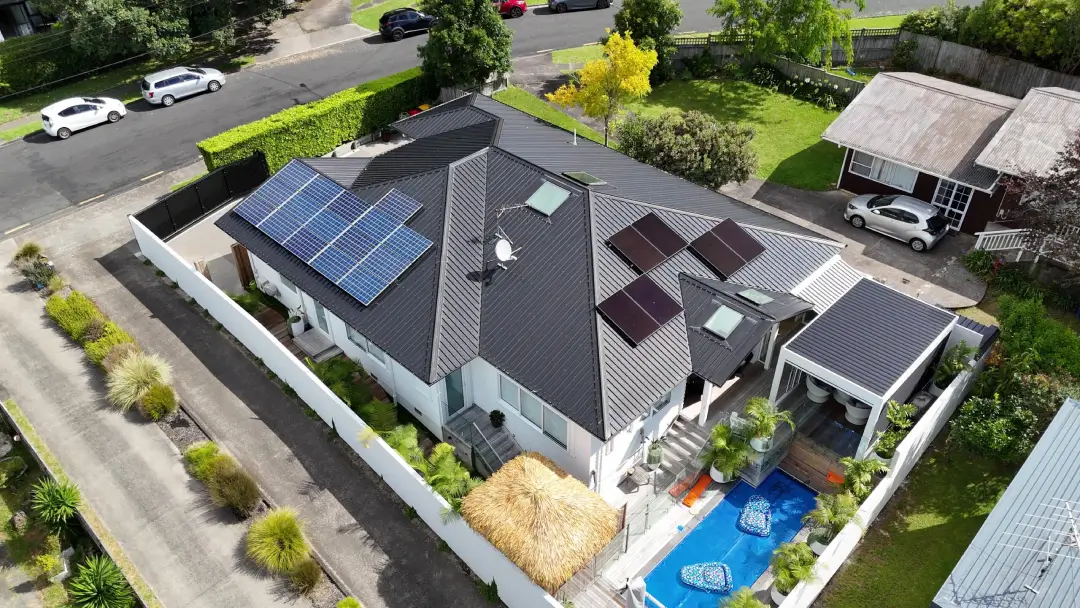
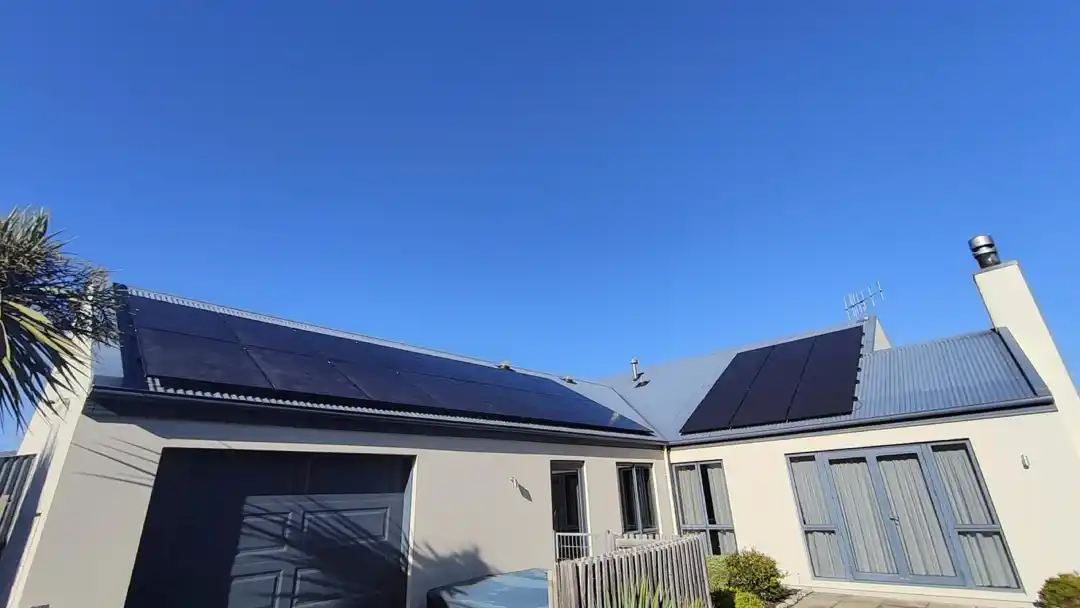
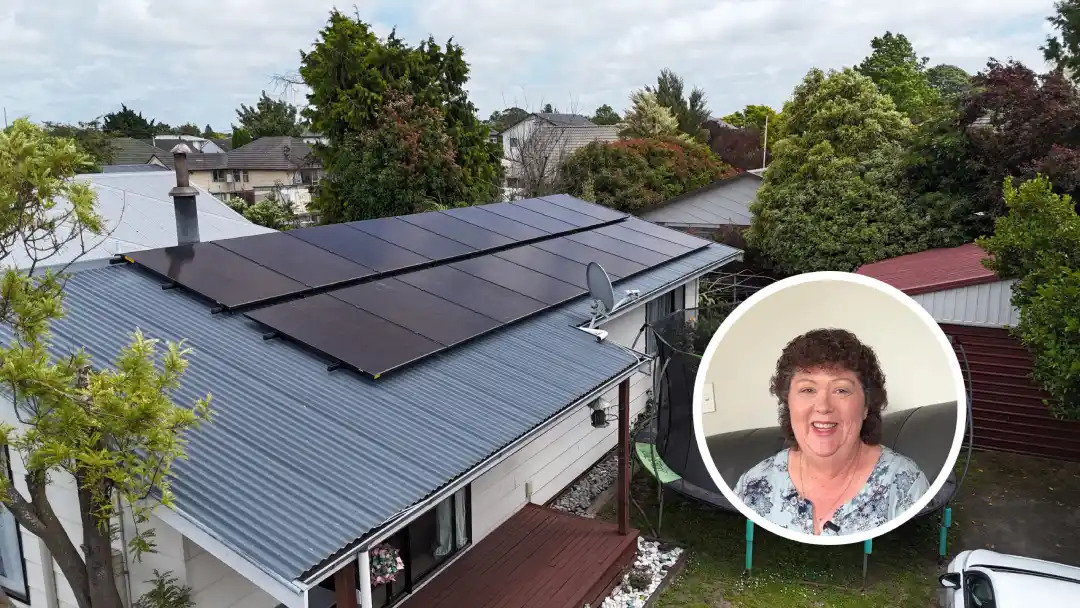
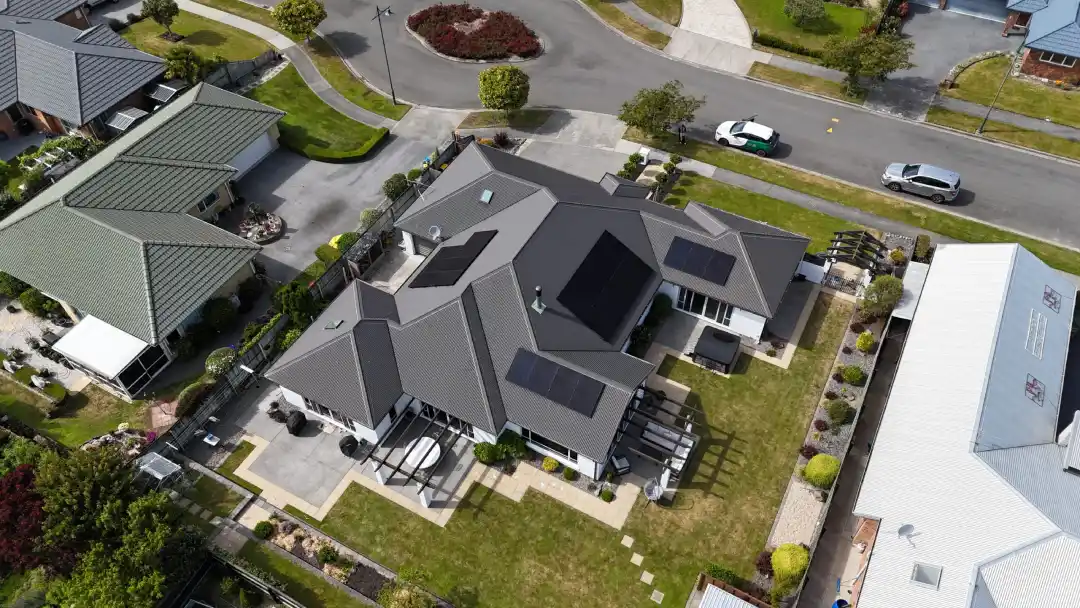
Every home is different. The right system depends on your power usage, lifestyle, roof orientation, and how independent you want to be from the grid. Read our plain-English guide to grid-tied, hybrid and off-grid solar systems, or book a free consultation and we’ll recommend the right one for your home.

Not all solar systems work the same way. Grid-tied, hybrid and off-grid each suit different homes, budgets and goals, mostly coming down to what you want at night and during a power cut. Here’s how the three compare on the things that matter most, so you can see which fits your situation before you talk to us
| Feature | Grid-Tied | Hybrid | Off-Grid |
|---|---|---|---|
|
Daytime power |
Yes |
Yes |
Yes |
|
Night power |
Grid only |
From battery & grid |
From battery & Generator |
|
Outage backup |
No |
Yes (essential circuits) |
Yes (full home) |
|
Sells excess to grid |
Yes |
Yes |
No (not connected) |
|
Best for |
Urban homes wanting fastest payback |
Most NZ homes wanting flexibility and outage backup |
Rural or remote properties with no grid connection |
Five technologies that work alongside solar panels, reducing costs, lowering your carbon footprint, and improving comfort for your home.
Store solar power to use at night and during outages.

Warmer winters, cooler summers, and cleaner air for your family

Drier, cleaner indoor air year round, with lower running costs.

Cut your water heating costs by about 60% compared with a traditional electric or gas cylinder.
Charge on solar energy or using off-peak rates and stop paying at the pump.
At Future Energy, we look at your full energy footprint and your individual priorities, and give you independent advice on the best mix of solutions for your home.
 Posted on Google
 Sam Cawte
 We had a ducted heatpump system installed in our house recently. The initial meeting with Shane was very thorough, and he really took the time to consider what we were hoping to achieve with the system, and provided advice about the best options for conserving energy and saving us money. We had quotes from several other companies, but this one was competitive, and they were patient with all our questions and gave great explanations and rationale. Installation all went well and it’s been life changing for us. We’re no longer freezing in the mornings, our house is warm and free from condensation! Being able to control the system remotely via WIFI is such a bonus too!Posted on Google
 Jordyn FisiiahiFuture energy just installed a Panasonic ducted heating system into our home. It was a quick and easy process and we are extremely pleased with the result. All of the installation crew were extremely friendly, professional and left no mess! Initially we weren’t sure which type of system to go with but when Shane came out to give us a free quote he was so lovely and extremely knowledgeable and explained everything so well! He is clearly passionate about his role and teallly took the time to ask us what our needs were- as a family with young children with asthma and allergies he directed us to the product that would be best fit for this. We had quotes from multiple companies but because of our interaction with Shane, we felt confident Future energy were the right choice. Thankyou so much, I highly recommend both Future energy and the Panasonic ducted system!Posted on Google
 Tony SidonWe were thinking about getting Solar for awhile now and contacted Future Energy who were awesome to deal with and gave us excellent professional advice on the best system for us. Which we went with and are very pleased with the results, we can monitor what the Solar is providing to the house, storing in the battery and going back to the grid.For once Im looking forward to the next power account Thanks very much Future Energy and I cant recommend them high enoughPosted on Google
 Ken PerfectI had the team at future energy install solar panels on my house in christchurch in late March 2026. Great results so far. From start to finish the team were great to communicate with. The install was smooth despite some changes, all done in 1 day! The quote was made via video call and the deal was alot better than other quotes. The sales pitch wasn't as pushy as other providers also. Overall very happy with my experience.Posted on Google
 Angela WasherGreat service, informative advice and value for money. Very happy with the installation and we can’t wait to use our system.Posted on Google
 Nick WoodTwo heat pumps expertly installed. Highly recommended.Posted on Google
 Tom MatthewsVery professional, prompt follow up to my initial enquiry, Product knowledge and solutions and options to our requirements were well thought out, competitive quoting and the instalation team were fast tidy and offered alternatives to the installation when issues arose, good communication and follow up from sales office team..would recommend and use again.Thanks T.Matthews of Kingsland, very satisfied .Posted on Google
 Mimi ChiuEasy to arrange. Andy came to our site to inspect the logistics. We waited for a bit after paying the deposit, but once they contacted us, it was installed really quickly. Great service, easy communication.Posted on Google
 Sandra DeanFuture Energy were amazing with the installation of my father-in-laws Solar Panelling. He is so happy with the way this was handled from the initial consultation, to contact throughout the installation and the service of all parties involved was amazing. Thankyou to all the team involved. Rex Hays
Residential solar systems in New Zealand typically range from around $9,000 for an entry level 4 to 5 kW system through to $25,000 or more for a larger system with battery storage. Future Energy's Solar Starter package starts at $8,999, and our solar and battery bundle (Energy Resilience) starts at $19,999. Final pricing depends on your roof, your power usage and the panel and inverter brands you choose. We'll give you a same-day, no-obligation quote at your free home consultation.
Most residential solar systems in New Zealand pay for themselves in 6 to 9 years, after which the power your panels generate is effectively free for the remaining 20-plus years of the panel warranty. Payback varies with system size, your power usage, how much of your generation you use during the day, and the buy-back rate from your electricity retailer. The one future cost to plan for is an inverter replacement, usually somewhere around the 10 to 15 year mark, which is modest set against two decades of lower bills. Adding a battery extends adds resilience and long-term value, because you stop selling cheap solar to the grid and buying expensive power back.
Most New Zealand homes need between 10 and 20 solar panels (roughly a 4 to 8 kW system) to make a meaningful dent in their power bill. The exact number depends on your annual power use, your roof's orientation and pitch, how much shading you get, and whether you're adding a battery. As a rough guide, a household with a power bill of around $230 a month (about $2,800 a year, or 8,000 kWh) typically needs around 4 to 5 kW of solar (12 to 14 panels). We'll size your system exactly at your free assessment.
Almost certainly, yes. North-facing roofs at a 20 to 30 degree pitch are ideal in New Zealand, but solar still works well on east-, west-, and even some south-facing roofs, just with slightly lower output. Tile, colour-steel and Decramastic roofs are all suitable with the right mounting hardware. We work with most roof types across the six regions we serve. The free home assessment confirms the best layout for your specific roof.
Residential solar systems generally do not require building consent in New Zealand, as they fall within the permitted activity rules under Schedule 1 of the Building Act. However, your installation does need to be signed off by an electrical inspector and connected to the grid through your lines company (Vector, Orion, Wellington Electricity, etc.) via a connection application. Future Energy handles all of that paperwork on your behalf as part of every installation.
A standard grid-tied solar system shuts down automatically during a power outage. This is a safety requirement, so the system can't electrify the grid while crews are working on the lines. If you want backup power during outages, you'll need to add a solar battery (Tesla Powerwall, Sigenergy, Atmoce or SolaX) configured for backup. Future Energy will isolate your essential circuits (lights, fridge, internet, key power points) so they automatically keep running on stored solar through any outage.
Yes, and we'll talk to you about your battery plans at your free consultation so we install the right inverter and switchboard configuration from day one. With newer batteries like our Atmoce (designed specifically for easy retrofit), adding a battery later is more straightforward than ever. If you know upfront that you want to add a battery within the next year or two, we'll typically recommend a hybrid inverter so the upgrade is genuinely plug-in. Many of our customers start with solar only, then add a battery within 12 to 24 months once they've seen their first round of savings.
Yes. Solar panels generate power from daylight, not from direct sunlight alone, so they continue producing in overcast and winter conditions, just at a lower output than summer. A well-designed New Zealand residential system typically generates around 25 to 40% of its summer output during winter months. A Future Energy system is sized to deliver strong year-round savings, taking the seasonal generation curve into account from day one.
Stay informed with the latest industry trends, company news and energy solutions from Future Energy.

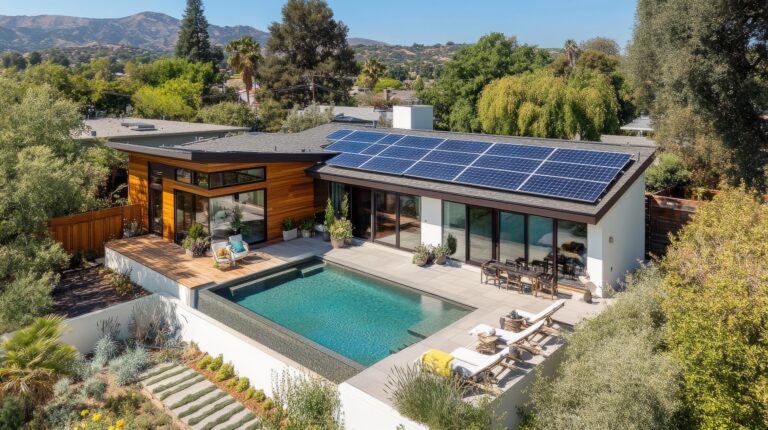
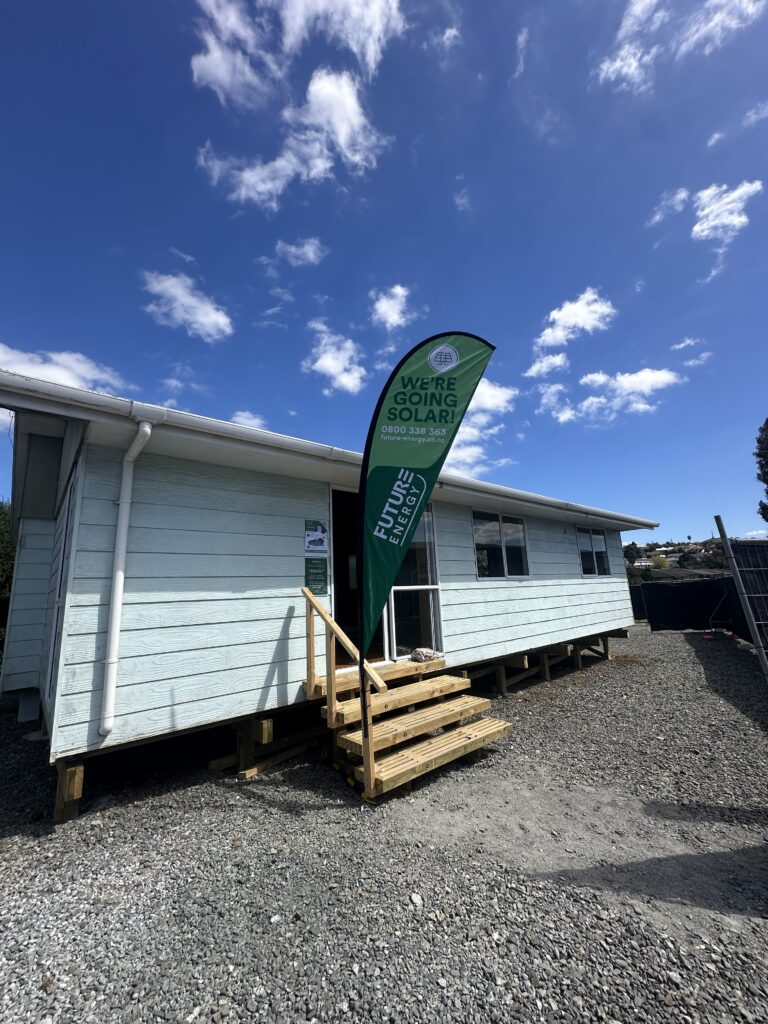
From green energy loans to interest-free options, we’ll help you find a payment structure that works for your budget. Many of our customers start saving from month one, with monthly repayments lower than their previous power bill. Talk to us about finance at your free energy audit.

Book a free, no-obligation home energy consultation
We'll assess your home's unique needs, from solar and storage to hot water and heating, to create a same-day quote that maximises your savings.

We’re not tied to any manufacturer, so we recommend the solar, battery, heating and EV products that genuinely suit your home, power use and budget.

Start with solar, then add a battery, heat pump or EV charger as your budget allows, with every system designed so future upgrades fit in seamlessly

From first consultation to switch-on and beyond, Future Energy designs and stands behind your whole system. One point of contact, one number to call.

14.5 MW of solar delivered and 300+ five-star reviews, with homes powered across New Zealand. Real systems, real results.