| 7.48kW Solar Panel Power | 16.1kWh Battery Storage | $2,799 Saving in Year 1 |
Project Overview
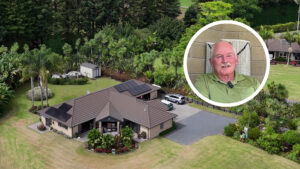
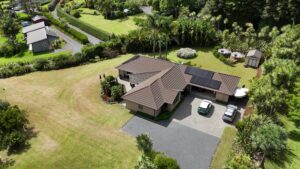
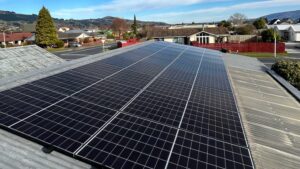
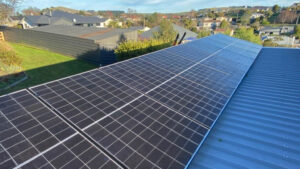
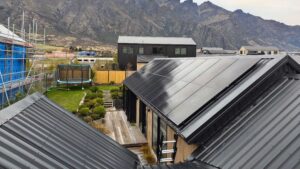
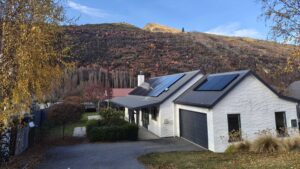
Solar battery storage NZ installations work best when the system is designed around the home it serves. For this Kerikeri homeowner, that meant working with a dual orientation roof to place 17 Suntech 440W panels across two aspects and pairing the 7.48kW array with a 16.1kWh Sigenergy battery system. The result is a home that generates 28.6kWh of clean electricity every day, stores the surplus for evening use, and reduces the annual power bill to effectively zero while maintaining up to 22.9 hours of battery autonomy.
The Challenge
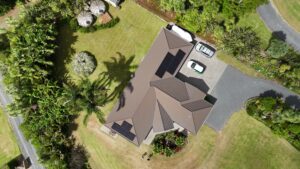
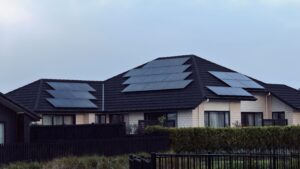
The Kerikeri property sits on a site with a dual pitched roof offering northeast and northwest aspects. Rather than limiting the solar installation to a single face and leaving generation potential untapped, Future Energy designed a split array that maximises the dual orientation. Ten panels on the northeast roof capture the morning sun, while seven panels on the northwest roof extend generation into the afternoon and evening. Together the two arrays generate more than the home consumes each day, with the surplus going into the Sigenergy home battery for use overnight.
Kerikeri is a Northland location with excellent solar radiation year round, but also a home that sits beyond the convenience of urban grid reliability. For this homeowner, the solar battery storage NZ system was not just about reducing bills. It was about being genuinely self sufficient and able to ride through grid outages without disruption to daily life.
The System
17 x Suntech Ultra V Pro Mini 440W Panels – 7.48kW Total
17 Suntech Ultra V Pro Mini STP440S N-type TOPCon full black monofacial panels were installed across the two roof aspects. Ten panels are oriented to the northeast at 48 degrees azimuth and seven to the northwest at 317 degrees, both at a 25 degree tilt. The split array configuration means the system generates across a longer daily window than a single orientation system would achieve, filling the battery earlier in the day and maintaining export to the grid through the afternoon. The Suntech Ultra V Pro Mini delivers up to 22.5% module efficiency, 25 year product warranty, and just 1% first year degradation followed by 0.40% annually, making it well suited to a long term residential solar power system where performance consistency matters.
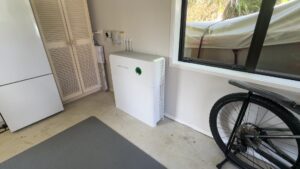
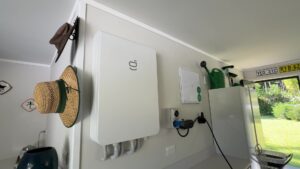
Sigenergy 15.0 TP Energy Controller and 2 x SigenStor BAT 8.0 Batteries
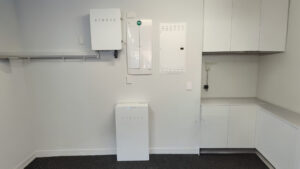
The Sigenergy 15.0 TP three phase Energy Controller paired with two SigenStor BAT 8.0 battery modules delivers a total of 16.1kWh of usable solar battery storage NZ capacity (15.6kWh usable). With up to 22.9 hours of battery autonomy modelled across the year, the system comfortably covers the home’s 17kWh daily consumption overnight and into the following morning when solar generation resumes. The Sigenergy system supports on and off grid operation with a zero millisecond switchover time during a grid outage, IP66 protection, and smart air cooling for reliable year round performance. The two SigenStor BAT 8.0 modules are stackable and expandable, meaning further battery capacity can be added in future without replacing the controller.
Dual Orientation Array for Maximum Daily Generation
The decision to split the array across northeast and northwest aspects rather than concentrate all panels on one face was deliberate. A single north facing array would generate a strong midday peak but taper off sharply in the morning and afternoon. The dual orientation approach flattens the generation curve across the full day, meaning the battery energy storage system receives a more consistent charge rate and the household has solar available across more of its active hours. For a home consuming 17kWh per day and generating 28.6kWh, the surplus is substantial and the battery fills reliably regardless of seasonal variation.
The Results
- 7.48kW total solar array across 17 Suntech 440W panels on dual orientation roof
- 10 panels northeast at 48 degrees, 7 panels northwest at 317 degrees, both at 25 degree tilt
- 16.1kWh total solar battery storage NZ capacity via 2 x Sigenergy SigenStor BAT 8.0 modules
- 28.6kWh of clean electricity generated every day
- 22.9 hours of battery autonomy modelled across the year
- $2,799 estimated first year savings on a current annual bill of $2,690
- Annual electricity bill reduced to effectively zero with a credit of $111
- 211 battery discharge cycles in year one
- 1.3 tonnes of CO2 offset per year
Generate more than you use. Store the rest. Pay nothing for power.
Frequently Asked Questions
How does a dual orientation solar array work?
A dual orientation array splits the solar panels across two roof aspects facing different directions. Rather than all panels facing a single direction and generating a sharp midday peak, a northeast and northwest split means generation begins earlier in the morning on the northeast face and continues later into the afternoon on the northwest face. For a solar battery storage NZ system, this is particularly valuable because the battery receives a more consistent charge rate across the full day rather than a single concentrated burst. The Kerikeri system achieves 28.6kWh of daily generation from 17 panels across two aspects.
How long will the battery last through the night?
The Sigenergy system at this Kerikeri property provides up to 22.9 hours of modelled battery autonomy, which comfortably covers overnight consumption and extends well into the following morning when solar generation resumes. With 16.1kWh of total storage and a daily household consumption of 17kWh, the battery handles the overnight load and the northeast facing panels begin recharging the system from early morning. In a grid outage the system switches to backup mode instantly with zero millisecond switchover, maintaining power to the home without interruption.
Is Sigenergy a reliable home battery system?
Sigenergy is a newer name in the New Zealand solar battery storage NZ market but carries strong technical credentials. The SigenStor BAT 8.0 uses LiFePO4 lithium iron phosphate chemistry, the same battery technology used in Tesla Powerwall and regarded as the safest and most stable chemistry for residential home battery applications. The system carries IEC and EN certification, IP66 protection rating, and a 10 year battery warranty. The modular stackable design means additional capacity can be added later without replacing the controller, making it a flexible long term platform for residential solar power systems.
What happens to excess solar generation if the battery is full?
When the battery reaches full charge, surplus solar generation is exported to the grid and the homeowner receives an export credit. At this Kerikeri property the export credit rate is 12.5c per kWh. On days with strong generation and low household consumption, particularly in summer, the system will export meaningful amounts of energy and earn credits that offset any overnight grid draw that occurs when the battery is depleted. The combination of self consumption, battery storage, and export credits is what drives the annual bill down to near zero for this solar battery storage NZ installation.
Interested in solar battery storage NZ for your Northland home? Future Energy designs and installs residential solar and battery systems across Northland and New Zealand. Talk to us about a system sized for your home, your roof, and your energy goals.