| 36 Panels 450W Suntech | 13.5kWh Tesla Powerwall 3 | $3,823 First Year Savings | $835 Projected Annual Bill |
The Challenge
This Jacks Point homeowner had a unique energy challenge: they were effectively running two households from the one property. Their home had an attached unit used as an Airbnb, meaning power consumption was consistently high with guests coming and going year round. On top of that, the family drives a Tesla and charges it at home, adding further demand to an already substantial electricity bill.
With everything in the home running on electricity, including hot water, heating, cooking, and EV charging, the combined load of two dwellings was significant. The homeowner wanted a solution that could genuinely offset both bills, not just make a dent in one of them.
The Solution
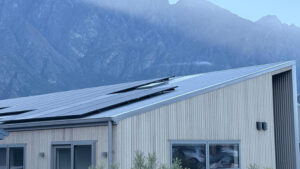
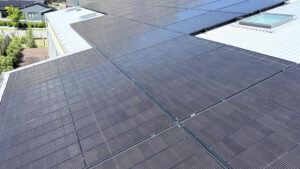
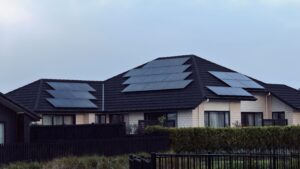
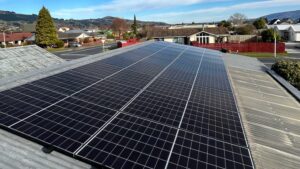
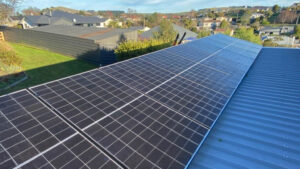
36 Suntech 450W Panels on a Perfect North Facing Roof
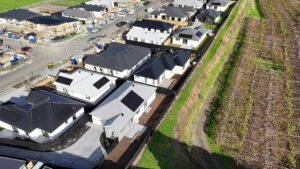
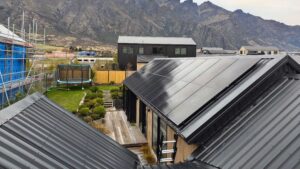
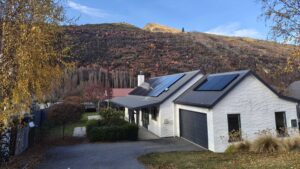
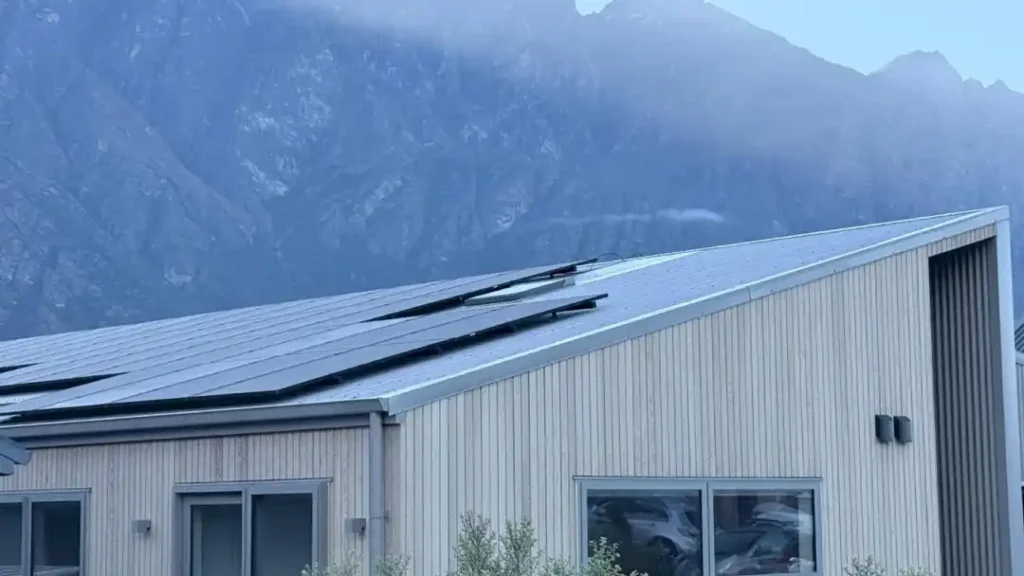
The home had a perfectly north facing roof, which in New Zealand is the ideal orientation for maximum solar generation year round. Rather than installing a smaller system, Future Energy designed a layout that filled the roof to capacity with 36 Suntech 450W panels. This maximises generation potential and gives the system the best possible chance of offsetting the combined energy demand of both dwellings. The system generates 37kWh per day on average, comfortably exceeding the 32kWh of daily consumption across the property.
Tesla Powerwall 3: The Natural Choice
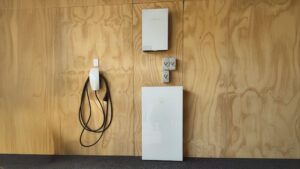
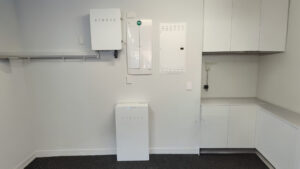
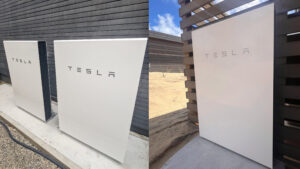
Already driving a Tesla and using a Tesla EV charger at home, the Powerwall 3 was a natural fit. The seamless integration across the Tesla ecosystem means the homeowner manages their car, home energy, and battery from a single Tesla app. The Powerwall 3 stores 13.5kWh of usable energy and provides up to 10kW of continuous backup power, keeping both the main home and the Airbnb unit running through the night and during any grid outage. Advanced energy management within the Tesla system allows the homeowner to optimise how energy is used, stored, and exported to maximise savings.
A Fully Electric Home, Powered by the Sun
With the entire property running on electricity, the solar and battery system now covers it all: heating, hot water, cooking, appliances across both dwellings, and EV charging for the Tesla. The system is designed to generate surplus energy during the day, store what is needed for evening use, and export the remainder to the grid for credit. The result is a property that runs almost entirely on clean energy it generates itself.
The Results
- Annual electricity bill projected to drop from $4,660 to just $835, a saving of $3,823 in the first year
- 37kWh of solar generated daily, exceeding the combined 32kWh daily consumption of both dwellings
- 13.5kWh Tesla Powerwall 3 providing overnight power and whole home backup for both properties
- Tesla EV charged from solar generation, effectively eliminating the cost of fuelling the car
- Seamless integration across the Tesla ecosystem, managed from a single app
- Hot water, heating, cooking, and Airbnb unit all running on clean solar energy
- Estimated payback period of 7 years 7 months, with the system warrantied to perform for 25 years
| Two dwellings. A Tesla on the driveway. Everything electric. One solar and battery system covering it all. Future Energy, Jacks Point, Queenstown |
Frequently Asked Questions
Can solar and battery cover the cost of running an Airbnb unit as well as my own home?
Yes, with the right system size. The key is designing a system large enough to meet the combined demand of both properties. In this case, filling the north facing roof with 36 panels and pairing it with a Powerwall 3 gave the system enough generation and storage capacity to cover both dwellings. A Future Energy assessment will size a system specifically to your situation.
Does the Tesla Powerwall 3 integrate with a Tesla EV and charger?
Yes, and this is one of the most compelling reasons to choose the Powerwall 3 if you already drive a Tesla. The Powerwall 3, your Tesla EV, and your Tesla Wall Connector charger all communicate through the Tesla app, giving you a single view of your home energy, battery, and vehicle charging. You can set your car to charge from solar only, or during off peak hours, to further reduce costs.
Is a north facing roof really that important for solar?
In New Zealand, north facing is the optimal direction for solar panels as it captures the most sunlight across the longest part of the day throughout the year. A perfectly north facing roof is an ideal starting point for solar design. That said, east, west, and even split array installations can still perform very well. Future Energy will assess your specific roof and design the most effective layout for your property.
Can I charge my EV from solar rather than the grid?
Absolutely. With a large enough solar system, you can schedule your EV charging to coincide with peak solar generation hours during the day. In practice this means charging your car largely for free using energy your panels have produced. The Tesla app makes this straightforward to manage, allowing you to set charging preferences that align with your solar production and battery state.