| 9 kW Solar Array | 86% Self Consumption | $2,703 First Year Savings | $66 Annual Bill After Solar |
Project Overview
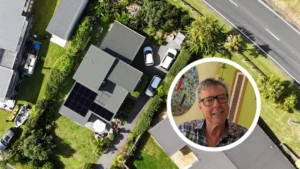
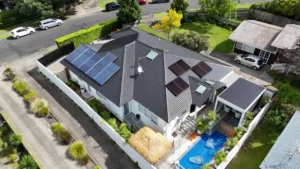
Terry moved down from Wellington to a new home in Waikouaiti, just north of Dunedin, bringing a new EV with her and dreading what a Dunedin winter would do to her power bill. Future Energy fitted a 9kW Trina solar array paired with a SolaX X1-Hybrid-7.5-D battery ready inverter, modelled to generate 11,211kWh a year against her 17kWh of daily consumption. The system covers an estimated 86% of Terry’s energy use directly from solar, cutting her annual power bill from around $2,770 down to an estimated $66, a $2,703 saving in the first year alone.
The Challenge
Moving south from Wellington to a colder, more exposed Otago coastline, Terry knew a Dunedin area winter would push her power bill up fast, and now she was charging a new EV at home on top of ordinary household use. Rather than a system that just took the edge off her bill, she wanted solar sized to do the heavy lifting on her actual day to day consumption, with a hybrid inverter that would let her add battery storage later if she decided she wanted more independence from the grid.
The System
18 x Trina 500W Panels – 9kW Across Two Strings
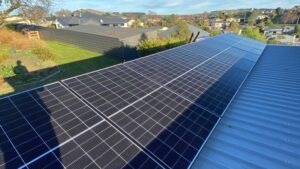
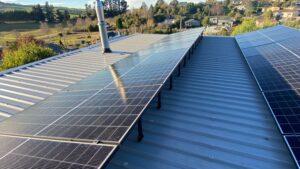
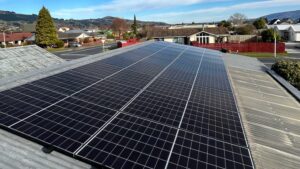
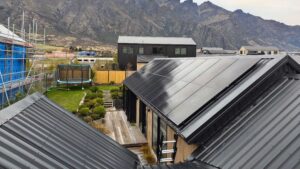
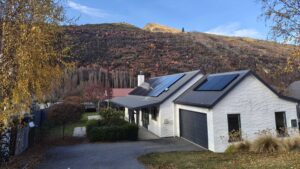
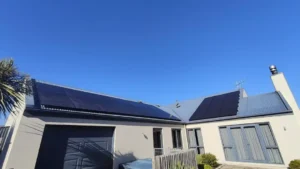
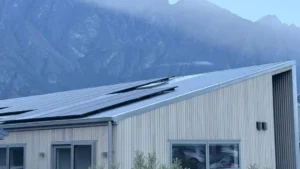
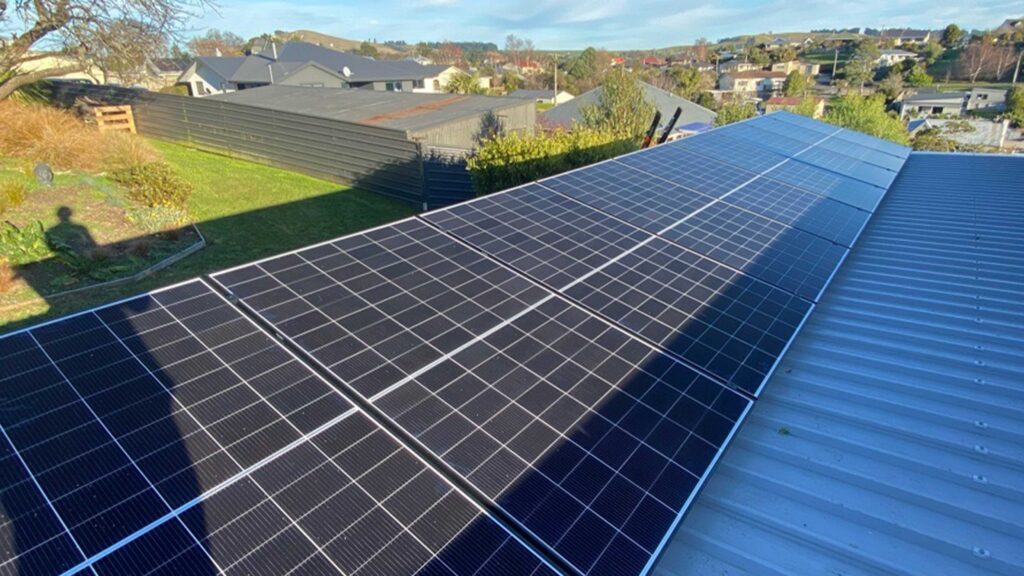
Eighteen Trina TSM-500NEG18R.28 panels were installed across two strings of nine, both north west facing at 335 degrees and a 23 degree tilt, for a combined 9kW array. Modelled to generate 11,211kWh a year, around 30.7kWh a day, the system meets an estimated 86% of Terry’s daily consumption directly from solar rather than the grid.
SolaX X1-Hybrid-7.5-D – Battery Ready 7.5kW Inverter
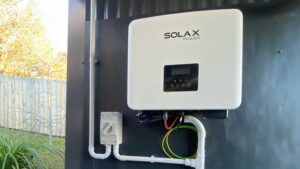
The SolaX X1-Hybrid-7.5-D is a 7.5kW hybrid inverter compatible with lithium ion or lead acid batteries, so Terry can add storage down the track without replacing the inverter. Once a battery is added, the system can deliver EPS backup output of up to 120% for an hour, with a switchover of under 10 milliseconds, giving her a path to home backup during an outage whenever she is ready for it.
The Results
- 9kW solar array across 18 Trina 500W panels on a north west facing roof
- SolaX X1-Hybrid-7.5-D 7.5kW battery ready inverter
- 11,211kWh of clean electricity generated a year, around 30.7kWh a day
- 86% of daily energy use met directly by solar
- $2,703 estimated first year savings
- Annual power bill cut from around $2,770 to an estimated $66
- $857 estimated annual solar export earnings
- An estimated $54,751 in lifetime savings over 25 years
- An estimated 1.3 tonnes of CO2 offset per year
- Estimated payback in 8 years and 10 months
A Dunedin winter, minus the power bill.
Frequently Asked Questions
How much of a Dunedin winter power bill can solar actually cover?
It depends on the system, but a well sized array can cover the large majority of day to day use even through a cooler southern climate. For Terry’s Waikouaiti home near Dunedin, a 9kW array meets an estimated 86% of her daily consumption directly from solar, cutting her annual bill from around $2,770 to an estimated $66.
Does solar make sense if you’re about to add an EV to the household?
Yes, particularly if the system is sized around actual household consumption rather than a rule of thumb. Terry’s system was designed against her real daily usage, including a new EV charging at home, which is part of why the 9kW array was chosen over a smaller, off the shelf option.
What does a battery ready inverter mean if there’s no battery installed yet?
It means the hardest part of adding storage later is already done. Terry’s SolaX X1-Hybrid-7.5-D inverter is compatible with lithium-ion or lead-acid batteries from the outset, so if she decides to add a battery in future, it connects to the existing inverter rather than requiring a full inverter replacement, keeping the system on a clear upgrade path.
How long does a 9kW solar system take to pay for itself?
For this Waikouaiti system, Future Energy estimates a payback of 8 years and 10 months, with an estimated $54,751 in lifetime savings over the 25 year life of the panels. Because the system was sized against Terry’s real consumption rather than a generic estimate, the bulk of her power bill is offset from year one rather than building up gradually.
Relocating somewhere colder, or adding an EV to the household? Future Energy designs solar systems around how you actually use power, not just a generic estimate, wherever in New Zealand you’re moving to. Talk to us about a system sized for your home, your roof, and your energy goals.