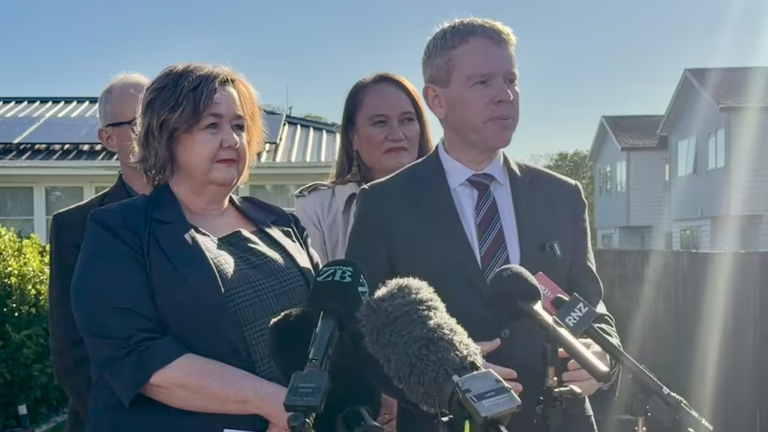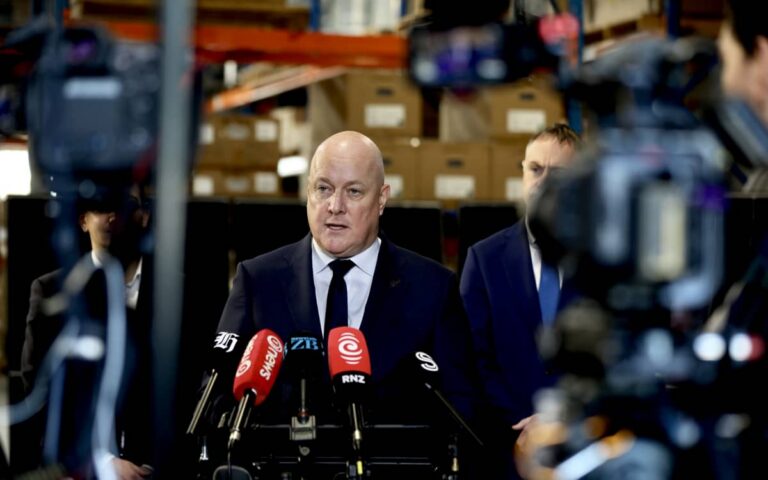
The Home Energy Fund Announcement took place at Future Energy today. A proposed national scheme to help households finance solar, batteries, heat pumps and insulation was announced at Future Energy’s Auckland headquarters this morning. Prime Minister Christopher Luxon was joined by Simeon Brown and Simon Watts, with the National Party setting out a policy they plan to introduce if re-elected in November.
For our team it was a genuine milestone. The announcement began with a tour of our Penrose premises and operations, followed by the policy launch, a team photo, and media interviews. We were proud to host an event focused on something we work on every day: making clean, affordable energy more accessible to New Zealanders.
What the Home Energy Fund would do
Under the proposal, the Home Energy Fund would be a financing platform jointly owned by central government and participating councils. It would offer low-interest, long-term loans secured against a homeowner’s property, repaid over time through their rates rather than as a large upfront payment.
In practice, the fund would pay an approved installer upfront, and the homeowner would repay the loan over about ten years, either through a charge on their rates. Because the loans would be secured against the property and backed by central and local government, National says they could be offered at low, competitive interest rates.
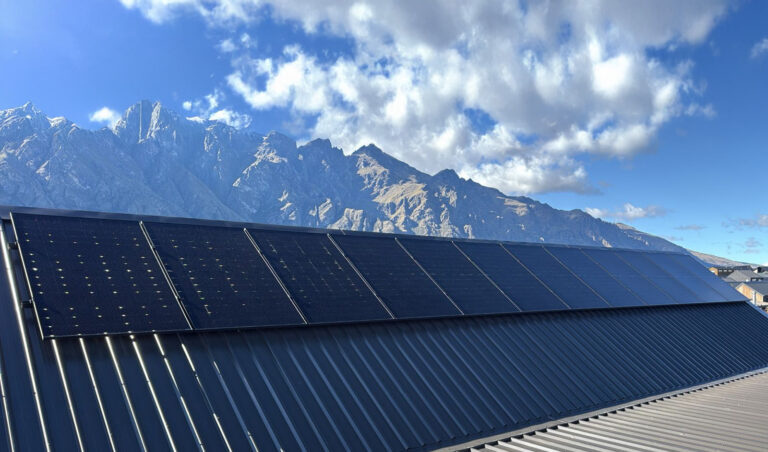
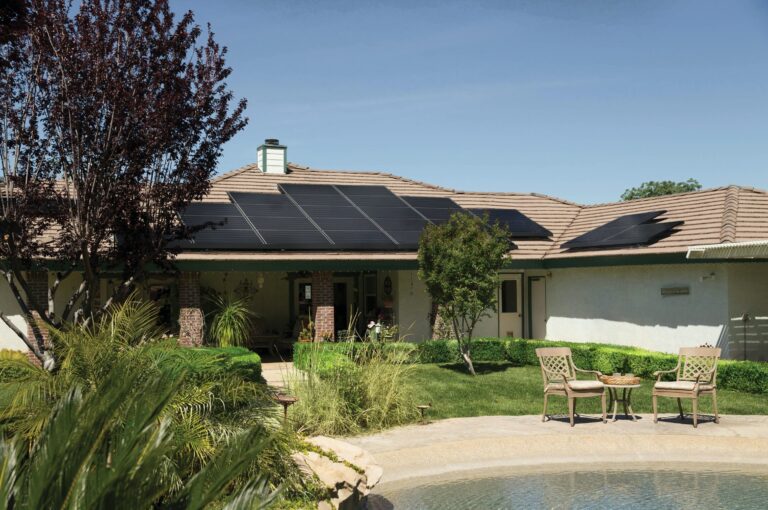
Eligible upgrades would include residential solar and battery storage, insulation, heat pumps and other home electrification. Council participation would be voluntary, and loans would be available to homeowners with at least 20% equity in their property.
Alongside the fund, National also proposed planning changes so that small-scale rooftop and ground-mounted solar, battery storage and micro-hydro could largely be installed as a permitted activity, without the need for resource consent.
National’s energy spokesperson Simeon Brown pointed to low uptake of home solar in New Zealand, at around 3 percent of households, compared with about 9 percent in the United States and roughly one in three homes in Australia. The party estimates about 80,000 households could take up the scheme over 15 years.
It is worth being clear that this is a proposed policy rather than a scheme that exists today. It would require a change to the Local Government Act, council sign-up, and the result of November’s election before it could take effect.
Why the Home Energy Fund matters for homeowners
The detail that stands out to us is the focus on upfront cost, because that matches what we see in homes across the country every week. The value of solar, batteries and efficient heating is rarely in question. The payback is strong, often in the range of five to seven years. The barrier is almost always the size of the initial investment.
Bank green loans already help some households, but they tend to be short in term and a meaningful share of applicants are declined. A loan tied to the property rather than the individual, repaid over a longer period, could open access to households that currently miss out, including people without a standard mortgage top-up to draw on.
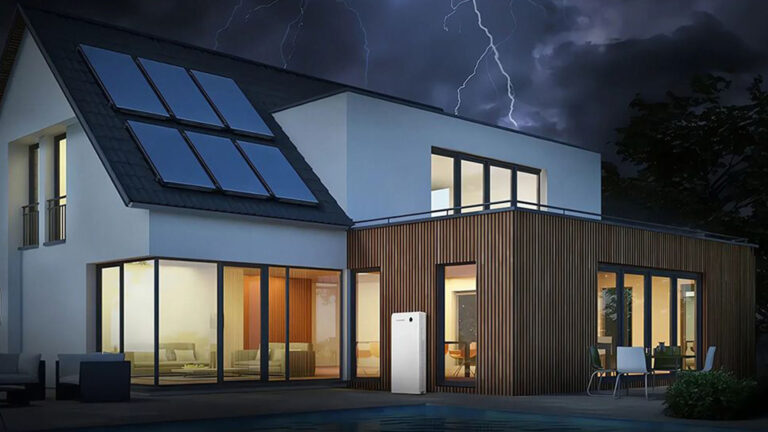
The other point we welcome is breadth. By covering batteries, heat pumps, and solar panels, the proposal recognises that a warm, resilient, low-cost home is about more than generation alone. Storage is what delivers savings in the evening and resilience when the grid goes down, and efficient heating is what keeps a home healthy through winter. That connects directly to the research on cold New Zealand homes that has been in the news this week.
A proud day for the Future Energy team
Being chosen to host an announcement of this scale is a real privilege, and the credit belongs to the whole team. Our co-founder and director, Heath Coleman, led the tour and spoke with the media on the day.
“The biggest barrier we see in homes across the country is the upfront cost. People can see the value and the payback is strong, but not everyone has fifteen or twenty thousand dollars ready to invest,” Heath said. “Anything that spreads that cost over a longer term, and that covers batteries and heat pumps as well as panels, could make a real difference for Kiwi families. We were proud to host today and to put the homeowner perspective forward.”

What happens next
Because the Home Energy Fund is a proposed policy, there is nothing for homeowners to apply for yet. If you are weighing up solar, a battery, or a heat pump in the meantime, there are existing low-interest green loan options through most major banks, as well as other interest-free options. We are happy to talk you through what suits your home and budget.
We will keep our customers updated as the policy develops. If you would like to be among the first to hear how schemes like this could apply to your home, you can sign up for our newsletter or book a free consultation for independent, product-agnostic advice on the most cost-effective place to start.
Live well with sustainable energy.