49%
Lower Winter Energy Costs
$1,000
Saved Over Three Winter Months
70%
Lower Household Carbon Emissions
$0
Gas Bills, Now Fully Electric
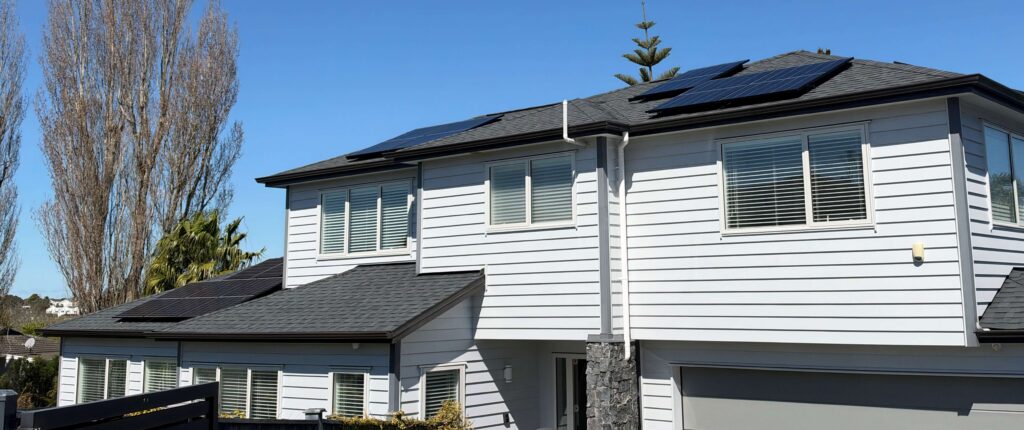
This year we completed a whole home energy upgrade on our multigenerational house in East Auckland. In the spirit of full transparency, it’s my own home: I’ve worked in the New Zealand solar industry for more than 12 years, and in January 2026 I joined Future Energy as Head of Marketing. Before the upgrade, we had high power bills, a ducted heat pump that wasn’t doing its job and very different comfort needs from one end of the house to the other. Future Energy fixed the ducting, added room-by-room AirTouch control, installed 7.125 kW of solar with a 10 kWh battery, gave the self-contained apartment its own heat pump, ventilation and air purification, and replaced gas hot water with a heat pump so we could disconnect gas altogether. Comparing this winter with last winter, at exactly the same power prices, our energy costs almost halved, saving about $1,000 in three months, and our household energy emissions fell 70%. The real numbers are below so you can judge for yourself.
A busy house with very different needs
In June 2025, Craig and I moved into a 2020-built, multigenerational home. We share it with our two adult children, and we reconfigured part of the house as a self-contained apartment so everyone has their own space while living under one roof. Add a dog and two cats and it’s a full house.
We’d had solar and a battery at our previous home, so we knew what good looked like. This house came with a fully ducted heat pump already installed, which on paper should have kept everyone comfortable. It didn’t.
The problems we were living with
- High bills. Our first winter bill for electricity and gas came to $646. In the middle of summer it climbed to $704.
- One bedroom the ducting never reached. One of the bedrooms simply didn’t cool. Through the heat of summer we were running two Dyson fans on cooling around the clock just to keep it bearable.
- Hot and cold at the same time. Sun-facing rooms overheated while others stayed cold, and even with a fully ducted system we were still reaching for a Dyson in the living areas.
- Air that travelled. Smells from the apartment, cats and incense mostly, drifted through the rest of the house.
- Air quality that mattered. With severe allergies in the family, clean air in the apartment was a priority, not a nice-to-have.
It started with a home energy assessment
A Future Energy consultant comes to the home and looks at how the whole household uses energy: heating, cooling, hot water, cooking, air quality and the power bill itself. It’s not a solar quote with a few extras bolted on. Most homes have more than one problem to solve, and ours certainly did. The recommendation that came back treated the house as one system, not just a roof.
Followed by a site inspection
Before installation, Future Energy carries out a site inspection on every ducted heat pump and solar project.. A technical specialist and the consultant come back to the home, get into the ceiling space and up on the roof, and check the switchboard and circuits for anything the first visit couldn’t see.

Technician and sales consultant both attend site inspections to ensure consistent service and communication.
In our case they found plenty. The ducting on the original system was undersized for the heat pump it was connected to, so heating and cooling were leaking into the ceiling cavity instead of reaching the rooms. Then, crawling further into the ceiling, they found the real surprise. The duct to that one bedroom had never been connected. It had been nailed to the side of the house, quietly heating and cooling the ceiling cavity all along.
It explained everything, and without that inspection we would never have known.
“I’ve spent more than 12 years in solar, and our house proved something I’ve believed for a long time. Solar is only one part of the picture. Our biggest problems weren’t on the roof at all. They were in the ceiling, in the air and in the gas bill. Looking at the whole home and fixing it as one system is what made the difference, both to what we pay and to how the house feels to live in.” Nicki Smith, Head of Marketing, Future Energy
The solution
Heating, cooling and air quality
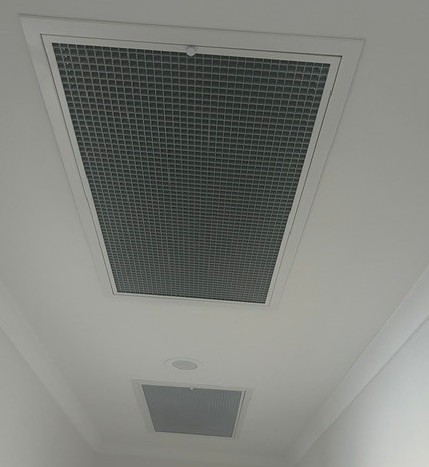
- Ducted system repaired and upgraded: undersized ducting replaced with a new supply plenum and duct runs, a larger return, the outdoor unit relocated, and that forgotten bedroom finally connected.
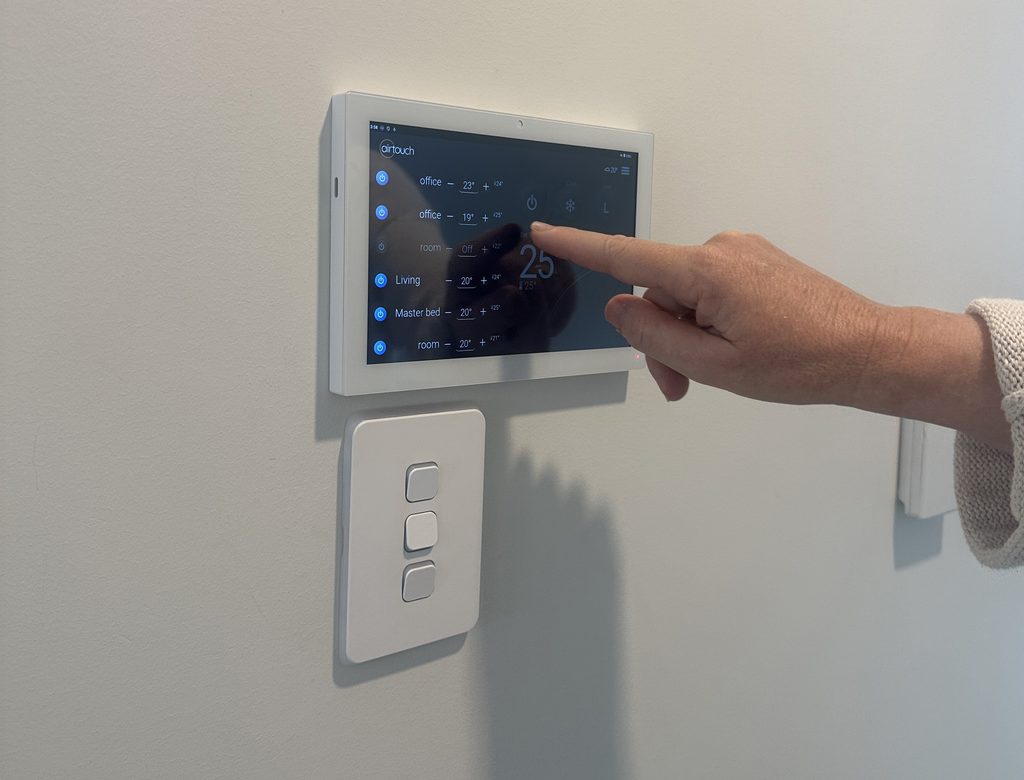
- AirTouch 5 zone control: motorised dampers and wireless temperature sensors, so each room can be set to its own temperature from the wall panel or a phone.
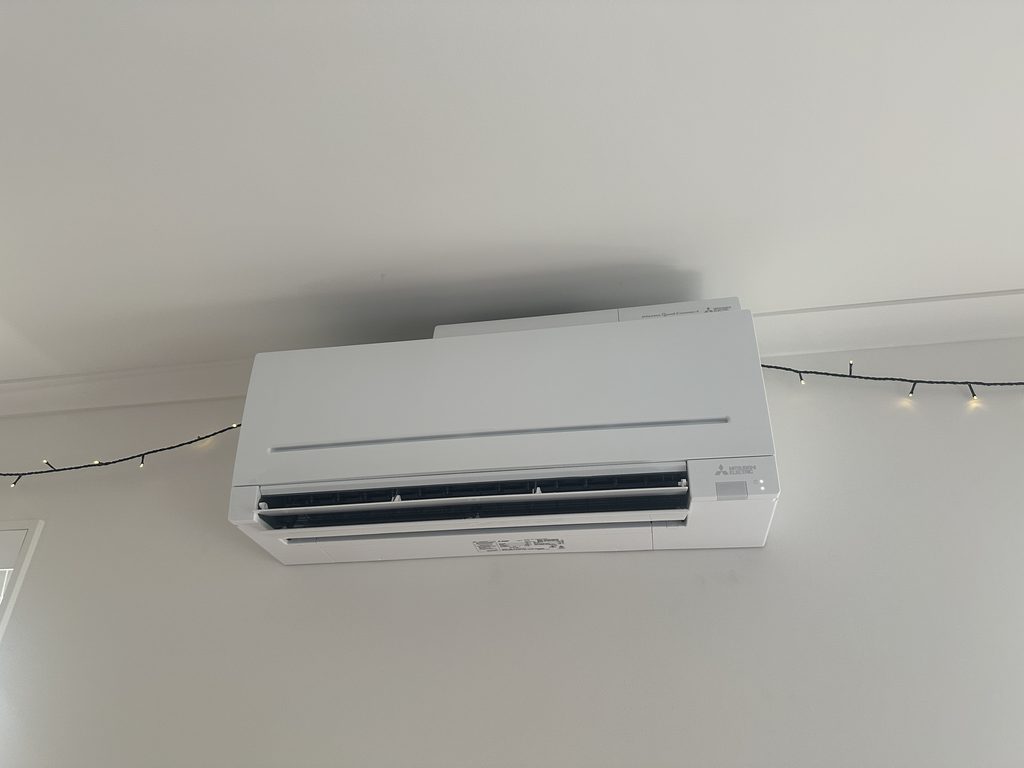
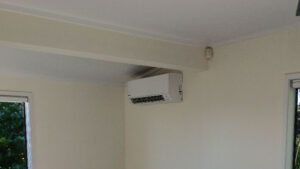
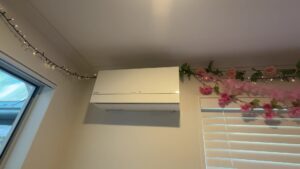
- A heat pump for the apartment: a Mitsubishi Electric 3.5 kW high wall with Plasma Quad Connect air purification, so the apartment has its own heating and cooling, controlled by whoever lives there. It runs at a very different temperature from the rest of the house, and the built-in air purification was chosen with allergies in mind.
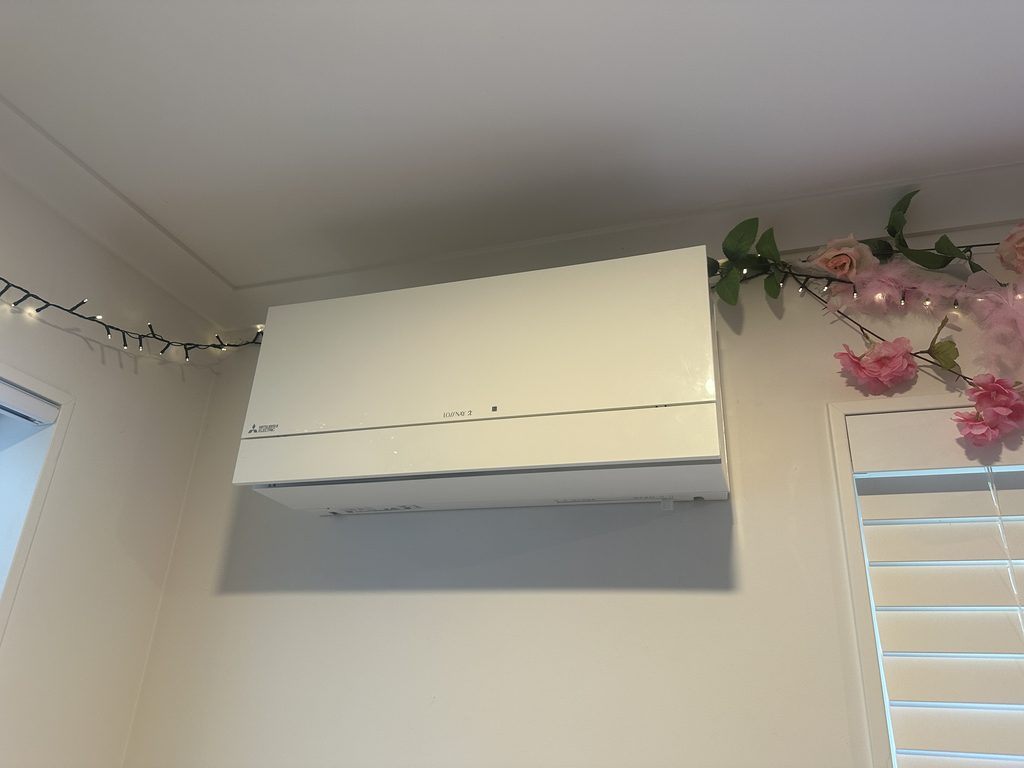
- Ventilation and air purification for the apartment: a Mitsubishi Electric Lossnay heat recovery unit that brings in filtered fresh air and removes pet and incense smells, supported by a Panasonic ceiling-mounted air purifier.
Solar and battery
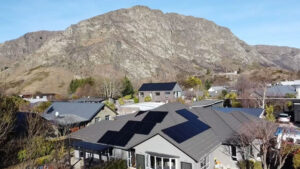
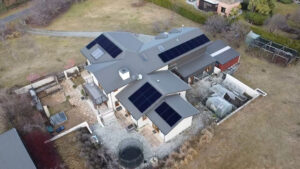
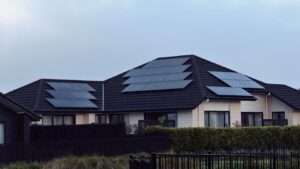
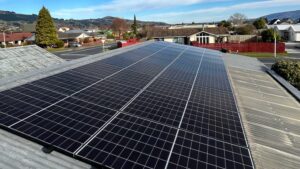
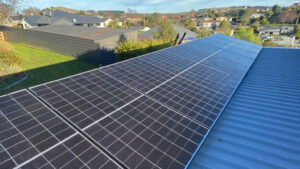
- Solar: 15 LONGii Hi-MO X10 475 W panels (7.125 kW). Our multi-faceted roof limited how many panels we could fit, so the design spreads them across three separate arrays on the north, east and west facing roof faces to make the most of every usable space.
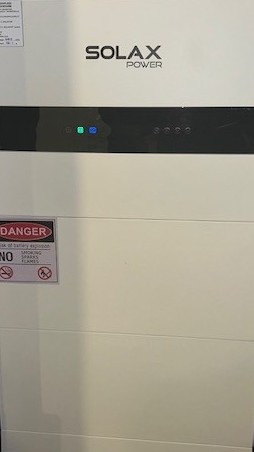
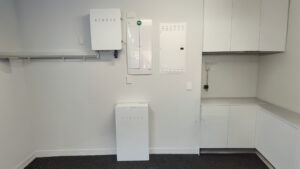
- Battery: a SolaX 8 kW hybrid inverter with 10 kWh of stackable LFP battery storage, so solar generated during the day keeps powering the house into the evening.
Hot water and goodbye gas
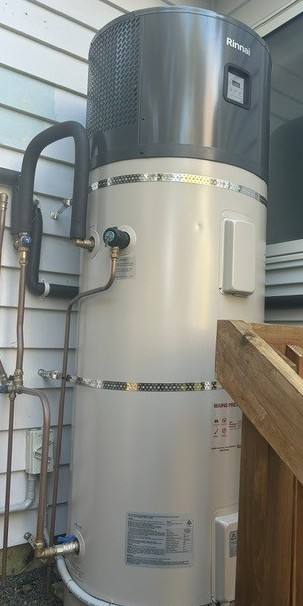
- Hot water heat pump: a Rinnai Hydraheat 340L. It’s probably more than we need, but we sized it for the house rather than for us, so it will suit whoever lives here next.
- Gas disconnected: with hot water moving to a heat pump, we swapped the gas hob for an induction cooktop and disconnected gas entirely. The daily connection charge alone was costing us almost $1,000 a year before we’d used any gas at all.
Installation
The installers arrived on a crisp, clear morning, and over two and a half days they replaced the undersized ducting, fitted a bigger return, connected the missing bedroom, installed the solar, battery and hot water heat pump, and kitted out the apartment with its own heat pump, ventilation and air purifier.
The results
On the bill
We’ve now come through our first winter with the new system, so we can compare it directly with last winter: the same three months, 10 June to 10 September, measured on the same meter-read dates. Our power prices didn’t change between the two years (the same 23.5c per kWh and the same daily charge), so the difference is all down to the house.
| Winter 2025 (10 Jun to 10 Sep) | Winter 2026 (10 Jun to 10 Sep) | Change | |
| Cost: whole winter (three months) | |||
| Electricity and gas, total | $2,039 | $1,038 | 49% lower, $1,000 saved |
| Average per month | $680 | $346 | $333 a month saved |
| Energy: average per day | |||
| Grid electricity | 51.3 kWh | 30.7 kWh | 40% lower |
| Gas | 22.4 kWh | 0 kWh | Disconnected |
| Total energy bought | 73.7 kWh | 30.7 kWh | 58% lower |
| Carbon: whole winter (three months) | |||
| Household energy emissions | 803 kg CO₂e | 239 kg CO₂e | 70% lower |
| Our latest bill vs the same bill last year (Aug to Sep, one month) | |||
| Electricity and gas bill | $766.33 | $289.14 | 60% lower |
| Gas connection: per year | |||
| Gas daily charges (incl. GST) | $989 | $0 | Removed |
Source: Contact Energy bills and meter readings for the property, 10 June to 10 September 2025 and 2026, at the same tariff in both years. Emissions calculated with Ministry for the Environment emission factors (Measuring Emissions Catalogue 2026).
What stands out to me is that we’re buying 40% less electricity from the grid over winter, even though our hot water and cooking have moved from gas to electricity. Count the gas we no longer use and we’re buying 58% less energy overall. The solar and battery are carrying the load, and very little goes back to the grid because almost everything the panels make is used in the house.
“I’ve been a financial adviser for 18 years, so I looked at this the way I’d look at any investment. Just being connected to gas was costing us $989 a year in daily charges before we’d used any of it, and that cost is now gone. Over winter alone we saved about $1,000 compared with the same three months last year, on exactly the same power prices, so none of that is a tariff change. The savings aren’t a one-off either. They come through every month, and with so much of our energy now coming off our own roof, we’re far less exposed to future price rises.” Craig Smith, Partner, Findex Wealth Management
In the house
- AirTouch is my personal highlight. Controlling heating and cooling room by room from my phone is the ultimate luxury.
- Everyone has their own comfort. Each person controls the temperature and airflow in their own space.
- No more Dysons. The ducted system now reaches every room, including the bedroom that was never connected.
- Cleaner, fresher air. The smells no longer travel through the house, and we’ve noticed a real difference with allergies.
- Better sleep. We’re all sleeping more comfortably.
How we paid for it
We didn’t pay upfront. We funded the upgrade with an ASB Better Homes Top Up, fixed at 1% for three years when we took it out. Our minimum repayments are $62 a fortnight, which works out at about $134 a month. Over winter our energy costs dropped by around $330 a month compared with the same months last year, so the savings cover the repayments more than twice over.
Alongside that, we’re putting $1,000 a month into an investment. At the end of the three-year fixed period we’ll use it to pay the loan off in full, before the low rate ends.
Financing it this way is what made it possible to do the whole house at once, rather than tackling one room or one product at a time.
This is our own approach, not a recommendation. Interest rates, green loan offers and lending criteria change and depend on your situation. Future Energy doesn’t provide financial advice, so talk to your bank or a financial adviser about what suits you.
“My rule with low-interest deals is simple: use them, but only ever with a plan to clear the loan in full before the low rate ends. The energy savings cover the repayments, and our own savings plan clears the balance on time. Even after the repayments, we’re well ahead.” Craig Smith, Partner, Findex Wealth Management
“Energy should make a home better to live in, not just cheaper to run. For us that meant fixing what was already there first, then bringing solar, storage, heating, ventilation and hot water together. That’s what a total energy solution does: lower costs, greater comfort, healthier air and less carbon. To me, that’s sustainability at its best.” Nicki Smith, Head of Marketing, Future Energy
FAQs
What’s different about Future Energy?
I’m biased, because I work here. But with my customer hat on, these are the three things that stood out:
- In-home consultations that get to know how you live and what your house can and can’t do.
- A site inspection before install day to pick up hidden issues. In our case, a duct that had never been connected.
- A total home energy solution that makes a real difference to energy costs, comfort, health and carbon.
Can an existing ducted heat pump be fixed if some rooms aren’t heating or cooling?
Often, yes. Undersized ducting, poor returns and disconnected ducts are common causes. In this home the ducting was resized, the return enlarged and a bedroom duct that had never been connected was reconnected, rather than replacing the whole system.
What is AirTouch zone control?
AirTouch adds motorised dampers and temperature sensors to a ducted system so each room or zone can be set to its own temperature. You control it from a wall panel or your phone, and rooms you’re not using don’t need to be heated or cooled.
Can you install solar on a roof with lots of small faces?
Yes. A multi-faceted roof limits how many panels fit, but splitting the system into several arrays on different roof faces makes the most of the usable space. This home has 15 panels across three arrays.
Can I use a green home loan to pay for a whole home energy upgrade?
Many New Zealand banks offer green home loans or mortgage top-ups at a lower interest rate for solar, batteries, heat pumps, hot water heat pumps and ventilation. This home was funded with an ASB Better Homes Top Up, and the monthly energy savings more than cover the minimum repayments. Each lender has its own criteria, so check with your bank.
Is it worth disconnecting gas?
It depends on the home. Here, the gas daily charge was $2.71 a day including GST, almost $1,000 a year before any gas was used. Moving hot water to a heat pump and cooking to induction removed that charge entirely, and because gas produces more than twice the emissions per kWh of New Zealand grid electricity, it was also the biggest carbon saving in this home.
What happens at a Future Energy site inspection?
A technical specialist and your consultant visit the home, check the ceiling space, roof, switchboard and circuits, and confirm the final design before work begins. It’s where hidden issues like undersized or disconnected ducting are picked up.
Could your home work better too?
Most homes have more than one energy problem, and some of them are hiding in the ceiling. Book a free home energy consult and we’ll look at your whole home, from heating and cooling to hot water, air quality and solar, with one point of contact from your first conversation through to servicing and warranty. Book A Free Home Energy Consult or call 0800 338 363